From 3 Sessions a Month to 11 - The Igal Alexi Story
How a single-needle artist almost nobody could find went from three sessions a month to eleven, with 3.9x the revenue and nearly double the project value.
By Greg Gelf
We met Igal through Mark, one of our clients. Before the first call, everyone we spoke to said the same thing about him. This guy is on another level.
Then we met him and found out they were not exaggerating.
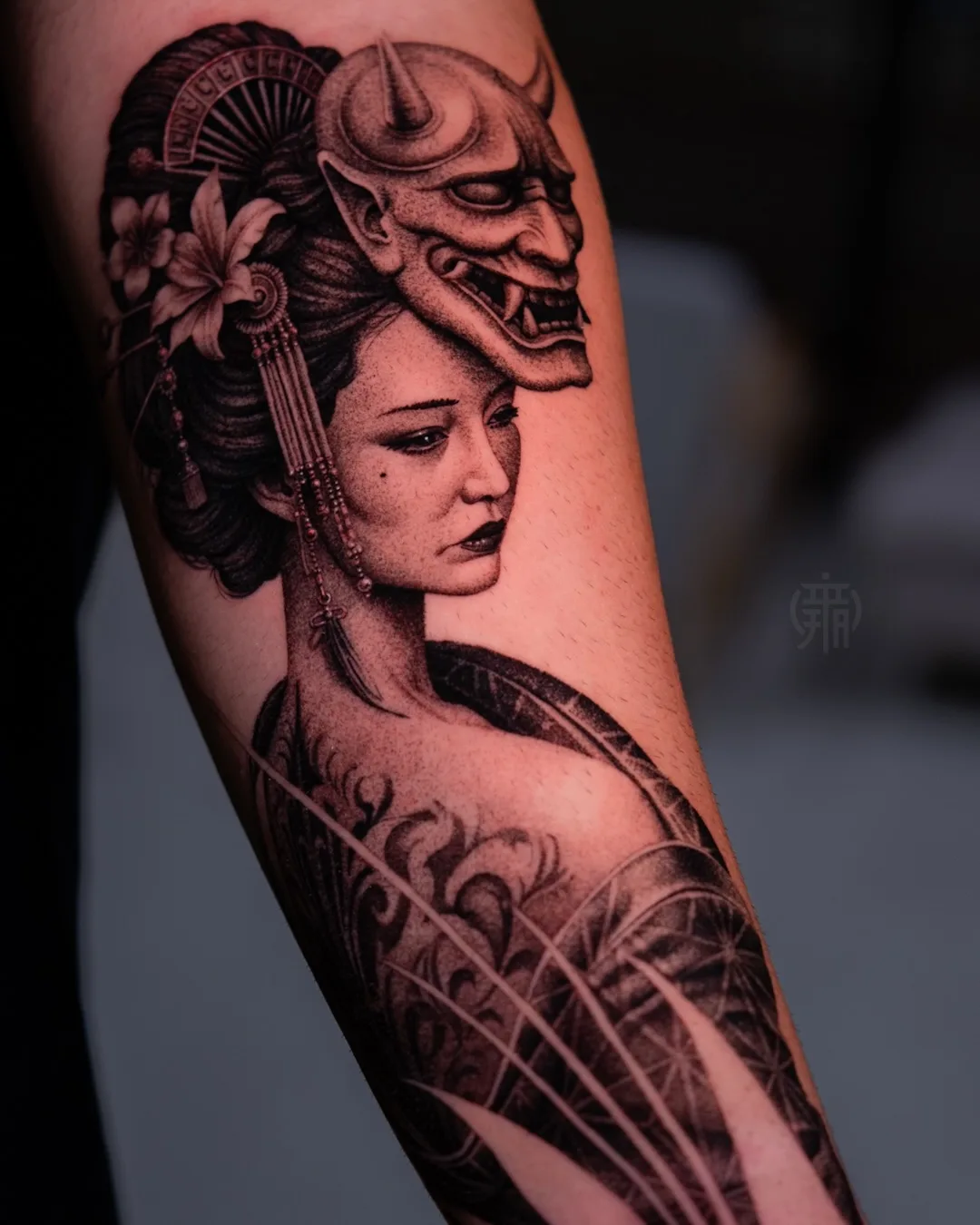
Igal built his first tattoo machine himself, as a teenager. He works out of Tel Aviv, and he works full sleeves with a single needle, because that is the only way to get the texture he is after. He calls it pointillism realism. Hannya masks, geishas, dragons, shishi lions, all of it built out of thousands of individual points. There are not many people anywhere with that kind of patience, and you can see every hour of it in the work.
He is also one of the kindest people we work with.
And in December 2025, he was finishing fewer than three tattoos a month.
What Was Working, and What Wasn’t
The art was not the problem. It was never going to be the problem.
There were two problems, and only one of them was marketing.
The first was that almost nobody was seeing the work. Igal was already running ads. They were simply not landing in front of the people who book this kind of work. An artist this specific does not need more people looking at his page. He needs the right ones.
The second one is more human, and I see it more often than the first. When you truly love what you do, it is hard to price it. You are happy with the client sitting in front of you even at a lower number, so you never push it.
So the demand for what Igal makes existed and had no route to him. And the work that did get booked was priced under what the client was already willing to pay.
The Strategy - Point the Ads at the Person Who Actually Books Him
In the first meeting we worked out who that person is, and we got specific about it. Introverts. People in tech. Anyone pulled toward Japanese culture, who had been to Japan or was planning to go. People who arrive with a story they want on their skin rather than a design they saw somewhere.
Alongside that we set the position: Igal is the only artist in the country working this way. If you get tattooed by him, you own something almost nobody else has.
Then we put the work in front of exactly that audience and let it do what it was always going to do. The inquiries started landing.
Splitting the Sessions
The second change had nothing to do with marketing.
Igal was the artist who finished last in the studio. Every night. Sessions ran hours past the point where anyone is doing their best work, because he refused to leave a piece unfinished.
That is a quality problem and a business problem wearing the same coat. The client is getting the tenth hour of an artist whose best work happens in hour three. And the artist is burning himself down to the ground to deliver it.
The clients were willing to pay more. They were waiting to.
So we did two things at once. We raised the price, and we split the long tattoos across more sessions. The client gets Igal at his sharpest, every time they sit down. The project gets bigger because it is honestly bigger. Nobody is pretending a twelve-hour piece fits in one night anymore.
Both of those matter for the longevity of the artist, even when it feels a little bad on the way up. That is the part nobody warns you about. Raising your price does not feel like winning at the time. It feels like waiting for somebody to call you out.
Nobody did. Average project value nearly doubled, and the projects became what they always actually were.
Why Great Tattoo Work Does Not Sell Itself
Great work does not sell itself. It gets found, or it does not.
This is the part artists hate hearing. Igal’s art was already good enough. Nothing about it had to improve for the business to change. What changed first was simply who saw it.
Then something we had not planned for happened. Because he was working more, he got faster and more confident, and he raised his price as he went. The work we did together ended up sharpening his mastery of his own style. That was the best news we got all year.
All of it feeds back on itself. Better targeting brings in people who want the big Japanese sleeve rather than a small piece. Splitting sessions means those sleeves get planned properly instead of crushed into one brutal night. Bigger projects book further out. A calendar that is booked further out stops the panic that makes artists say yes to work they do not want.
Then it compounds. He has not had a quiet month since March.
Results So Far
🏆 4X the sessions, every month. He averaged three closes a month in 2025. Across 2026 he has averaged eleven sessions a month.
🏆 3.9X revenue. January through July 2026, measured against the same seven months of 2025.
🏆 1.9X average project value, from bigger projects and a price that climbed as he got faster.
🏆 The goal from meeting one, hit by March. We set a target of 10 sessions a month on 30 December. He hit it in month three.
🏆 9,661 to 11,394 followers, and the right ones.
🏆 October was fully booked before the month began.
In Igal’s Own Words
From a message he sent us (translated from Hebrew):
“I’ve said it before and I’ll say it again. There’s nobody like you in this world!!!! 🫶🫶🫶🫶 It’s not something to take for granted and I appreciate it so much. Love you from the bottom of my heart ❤️”
Right back at you, Igal ❤️
What This Story Actually Shows
Igal is the clearest version of a pattern we see constantly. Talent is not the bottleneck. An artist can be the best in his city and still be finishing three tattoos a month, because being the best is invisible if the right people never see the work.
Two things fixed it. Ads pointed at a specific person rather than at “people who like tattoos”, and a session structure that let the real size of the work show up in the price. Those are both parts of the system we build with every artist, and neither one works alone. Perfect targeting into a business that crams every piece into one exhausting night just produces a burnt-out artist with a full calendar.
If you want other versions of this story, read the Mark Ink case here or the Liad Polichuk case here.
See Igal’s work on Instagram: @igal.tattz.