How to Find Your Tattoo Style - 6 Lessons From Hentai Tattoo Artist Lior Sananes
Lior Sananes left a style she loved to tattoo hentai, the subject most artists avoid. Six lessons on picking a direction, pricing it, and handling the reaction.
By Greg Gelf
Most advice about finding your style tells you to look inward until something clicks.
Lior Sananes did the opposite. She left a style she loved and was already good at, and went at the one subject most artists will not touch.
She tattoos anime and hentai out of Tel Aviv, and guests regularly in studios across Europe. Her results are already written up. This piece is about the decision underneath them, which is the more useful half.
Quick Answer
You do not find a tattoo style by searching for the one that already fits you. You pick a direction that genuinely interests you and stay in it long enough to get good at it. Lior Sananes spent years in an abstract style called Body Flow and left it specifically because it had stopped being difficult, moving to anime and hentai work that is dense with small detail and precision. The style that becomes yours is usually the one with enough technical depth to keep demanding something from you, and enough specificity that a stranger can tell what you do from a single post. Comfort is the signal to move, not the signal to stay. The hard parts are rarely artistic: they are building a client base outside your own circle, and charging what the work is worth.
What Was Hardest About Her First Years as a Tattoo Artist
This is Lior on the years before any of it worked:
“The hardest thing in my first years was getting out of the close circle of friends, family and people who already knew me.
The other hard thing was asking for the price I actually thought I deserved. In the beginning I had that ‘I feel bad’ thing. It made me compromise, and sometimes people took advantage of it.“
Neither of those is about tattooing. That is the point. Almost nobody stalls because their line work is not good enough.
The 6 Lessons
We asked Lior what she would tell herself two years ago. These are her answers, in her words.
1. Your Circle Is Not a Client Base
Every artist starts the same way. Friends, family, people who already knew you. It feels like traction and it is not.
“What I wanted was a client base that comes to me because of my work, and because of the reputation I build for myself. Those are two different things.”
The circle is finite and it is forgiving. It books you because it knows you, it accepts whatever you charge, and it runs out. A stranger booking you off a photo is the only real proof the work stands on its own.
This is the most common place artists mistake activity for a business. A full calendar of people who would have booked you regardless is not demand. It is goodwill, and it expires.
2. The “I Feel Bad” Is Costing You Money
Lior has a name for the thing that kept her underpriced, and it is not a pricing strategy. It is a feeling.
“In the beginning I always had that ‘I feel bad’ feeling. It made me compromise on prices, and sometimes people took advantage of it.
It took me time to understand that I have to stand behind what my work is worth, and not feel uncomfortable asking for it.“
Two things are worth separating here. One is the number. The other is the flinch right before you say the number.
Fixing the number is easy. Artists raise prices on a spreadsheet all the time. The flinch is what undoes it, cause the discount does not usually happen in your price list. It happens in the DM, in the moment, when somebody pushes back and you fold.
And people read it. If you sound unsure about your own price, you have told the client the price is negotiable before they have asked.
3. Leave the Style You Are Already Good At
Lior did not arrive at anime work. She left something to get there.
“Before anime I tattooed Body Flow. Abstract, free, almost the complete opposite of what I do today. I loved that style.
At some point I wanted to challenge myself. To get out of my comfort zone and try something completely different.“
Read the reason carefully. Not that Body Flow stopped working. Not that it stopped selling. It stopped being hard.
“Anime is full of small details, precision and complexity. That difficulty was exactly the challenge I was looking for.”
This is backwards from how most artists choose. The usual move is to find the thing you can already do well and repeat it until the market gets bored. Lior picked on the basis of difficulty, and difficulty is what builds a moat. A style anybody can copy in a weekend protects nothing.
4. Hentai Tattoos, and “I’m Here to Normalize Kink”
This is the part that makes other artists uncomfortable, and it is the reason the whole thing works.
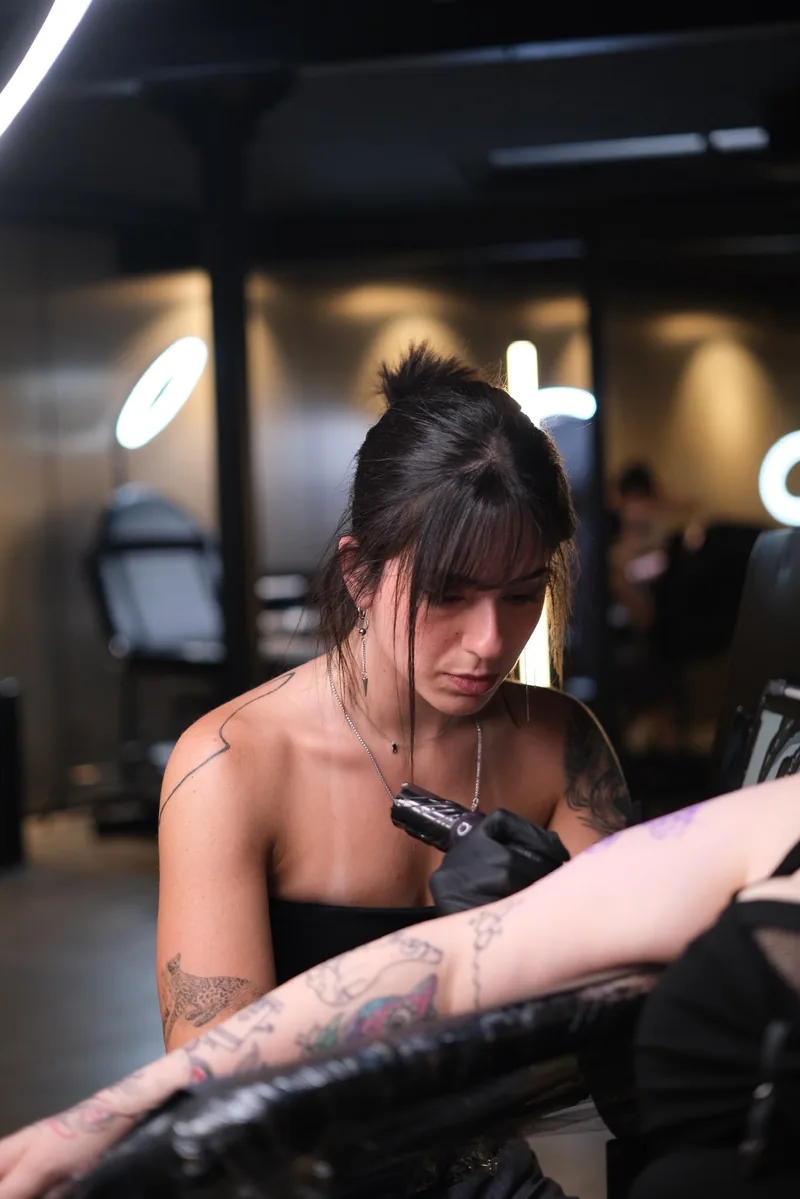
“What I love most about tattooing hentai is the freedom to express the things you love, even when they are considered taboo.
Fantasies, kinks, characters we grew up on, culture we connect to. There is something special about turning those into art you choose to carry on your own body, without being ashamed of it.
My clients know they can talk to me about all of it openly, without feeling judged.“
Every artist says they want to stand out. Then they pick a lane with a hundred other people in it, cause it is safe.
What Lior actually built is not a style. It is a room where a specific client can say what they want out loud without being judged for it. There is no competition for that room, because most artists will not walk into it.
That is what a real niche is. Not a visual filter. A thing you are willing to do that your competitors are not.
5. The Criticism Is About Them, Not Your Work
Pick a lane with an edge and you get a reaction. Lior is clear-eyed about it.
“I learned not to take negative reactions personally. A lot of the time they say more about the person behind them and their own boundaries than about my work.
For me it only shows how taboo the subject still is. And somewhere in there, it gives me more motivation to keep going.“
Worth being precise about what this does and does not mean. It does not mean ignore all feedback. A client telling you the healed result is patchy is information.
A stranger telling you your subject matter should not exist is not feedback about your work. It is a statement about their own limits, and it carries no instruction you can act on.
The artists who get hurt by comment sections are usually the ones who have not decided who they are for. Once that is decided, the wrong people disliking it is confirmation that the signal is landing.

6. What You See on Instagram Is Not Real Life
Her answer to what she would tell herself two years ago came back to the feed.
“Trust your intuition. Keep walking your own path and do not stop.
Because every time you think you have reached the edge of what you can do, you surprise yourself again.“
Every artist you compare yourself to is posting their best frame of their best piece of that month. You are comparing your whole week to their highlight. It is not a fair measurement and it never was.

The useful comparison is against your own work from a year ago. That one is real, and it is the only one that tells you whether the direction is working.
Common Questions About Finding Your Tattoo Style
How do I know if a tattoo style is right for me?
Two tests. Do you want the work on your own body, and does it still require something from you? If a style is comfortable within a few months, it is probably too shallow to build a career on. Lior left a style she genuinely loved because it had stopped being difficult.
Should I niche down as a tattoo artist?
Yes, and further than feels comfortable. A niche is only worth something if other artists are unwilling or unable to follow you into it. “Black and grey realism” is a category, not a niche. The strongest positions come from specificity, including subject matter other artists avoid.
How long before a new style starts booking?
Longer than a few posts. You need enough consistent work for a stranger to understand what you do from a single visit to your page, which in practice means your feed showing nothing else for a sustained stretch. Lior treated it as something to specialize in properly, not to test for a month.
What if my niche is controversial?
Then it has less competition. The practical cost is that paid reach gets harder and some platforms limit what you can promote, so word of mouth and organic content carry more weight. The benefit is that the clients who want it have almost nowhere else to go.
How do I stop undercharging?
Separate the price from the conversation. Set the number when nobody is asking, write it down, and practise saying it without adding a justification after it. Most underpricing is not a bad rate card. It is folding in the moment. More on that in raising prices without losing clients.
Can you build a tattoo career on hentai tattoos?
Lior has. The constraint is not demand, it is reach: paid promotion gets harder with adult-adjacent subject matter, so organic content and word of mouth carry more of the load. What you get in exchange is a client who has almost nowhere else to go, and who therefore travels and waits for you.
Do I have to drop the style I already tattoo?
Not immediately, but your page does. A feed showing three styles tells a stranger nothing about what you do. Most artists run the new direction alongside paid work in the old one for a while, and the switch happens on the public page before it happens in the calendar.
How many styles should a tattoo artist offer?
One, publicly. You can be capable of more, and most artists are, but the page that books strangers has to make a single clear claim. Offering everything reads as having no particular strength, which is the opposite of the reason someone books a specialist.
The Safest Thing She Did
From the outside, building a name on hentai looks like the risky choice. A narrow subject, a guaranteed share of people who will not like it, and no chance of ever being everyone’s artist.
It is the least risky thing in this whole story.
The risky position is the crowded one. Being the fourth best black and grey realism artist in your city, competing for the same clients, with price as the only thing separating you from the other three. That artist is exposed to every new artist who opens next year.
Lior is not competing with anyone. The clients who want what she makes have almost nowhere else to go, so they wait, and they travel, and they do not ask for a discount.
Neither does the work stay still. A subject that specific is not a local business. It guests in studios across Europe, because the people who want it are everywhere and there is nobody near them doing it.
The ability to tattoo is not a differentiator anymore. Being willing to pick something, and stay in it long enough to own it, still is.
Read next: